


Speaker

Prof. Dr. Zahriladha ZAKARIA
Faculty of Electronic & Computer Engineering,University Teknikal Malaysia Melaka, Malaysia
Title: Research Activities and Recent Trends of RF and Microwave Technologies
Abstract:
The RF and Microwave Engineering era was started by two scientists, James Clerk Maxwell and Heinrich Rudolf Hertz. In 1864, Maxwell presented Maxwell’s equations by unifying the works of Lorentz, Faraday, Ampere, and Gauss. He predicted the propagation of electromagnetic waves in free space at the speed of light Microwaves are a type of electromagnetic radiation, as are radio waves, ultraviolet radiation, X-rays and gamma-rays. In modern days, RF and Microwave technologies have a range of applications, including wireless communications, radar and, perhaps best known by most people, cooking. Microwaves have frequencies ranging from about 300 MHz to 300 GHz. The aim of this presentation is to briefly discuss the significant progress of microwave engineering and technology achieved in recent years, heralding an era rich in engineering discovery and innovations in the area of microwave technology. In this speech, recent trends of advanced research of various crucial applications in microwave engineering will be discovered. It covers from advanced wireless communications, material characterization, wireless energy transmission, microwave sensor and microwave imaging.

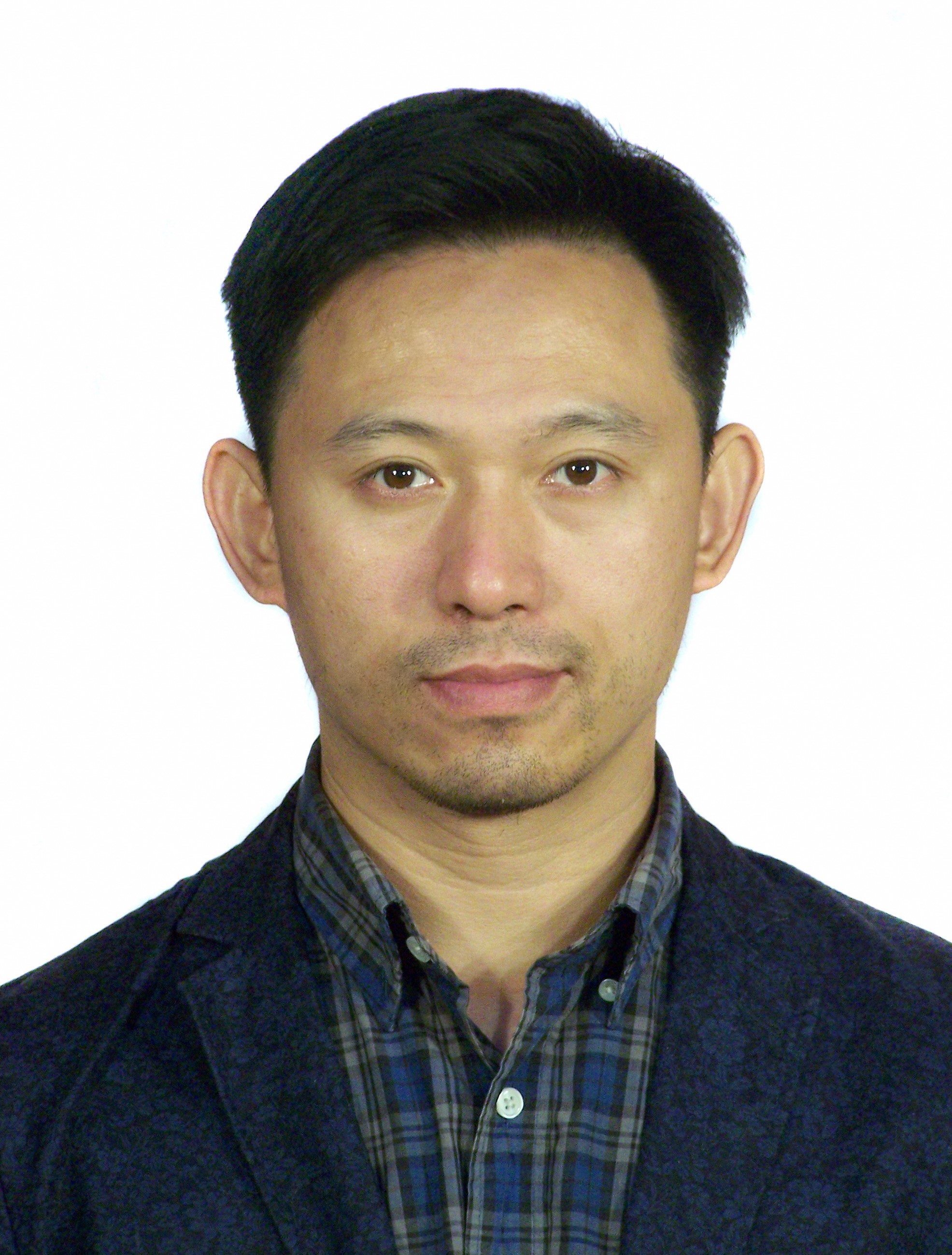
Prof. Xingpo Ma
Department of Internet of Things
Title: Secure Fine-grained Top-k Query in TWSNs-based Edge Computing Systems
Abstract:
A novel network paradigm of edge computing, namely TWSNs (Two-tiered Wireless Sensor Networks) , has just been proposed by researchers in recent years for its high scalability and robustness. However, in the TWSNs-based edge computing systems, the storage nodes, which are located at the upper layer of the systems, are prone to be attacked by the adversaries because they play a key role in bridging sensor nodes and Sink, which may lead to the disclosure of all the data stored on them as well as some other potentially devastating results. In this speaking, I will present the related works about the recent study on the integrity-and-privacy preservation problem for fine-grained Top-k queries in TWSNs-based edge computing systems, and introduces a sequence-encryption-based lightweight scheme named SLS-STQ (Sequence-encryption-based Lightweight Scheme for Securing Spatial-temporal Top-k Queries) which were proposed by us recently to solve the problem. In SLS-STQ, three algorithms, namely the report preparation algorithm, the query processing algorithm and the integrity verification algorithm, are designed for the sensor nodes, the storage nodes and Sink respectively. Moreover, in my speech, I will introduce more interesting research points in TWSNs-based Edge Computing Systems, and hope that it will bring inspiration to the researchers who are interested in the problems in such a field.

Assoc. Prof. Julien LE KERNEC
James Watt School of Engineering, University of Glasgow, UK
Title: Radar Sensing in assisted living
Abstract:
In this seminar, I will discuss the place of radar for assisted living. First, the context of assisted living and the urgency to address the problem will be described. The second part will give an overview of existing sensing modalities for assisted living and explains why radar is an upcoming preferred modality to address this issue. The third section presents developments in machine learning that helps improve performances in classification, especially with deep learning with a reflection on lessons learned from it. Finally, I will conclude with open challenges.